
Embracing the Future: Leveraging Distributed Teams for Business Success
Explore the benefits and challenges of distributed teams, and discover how they can transform your business by accessing global talent and reducing operational costs.
Get Free Consultation
Introduction to Distributed Teams
In today's fast-paced business environment, companies are increasingly turning to distributed teams as a strategic approach to enhance operational efficiency, reduce costs, and tap into a global talent pool. A distributed team is defined as a group of employees working from different locations, often across various cities or countries, without the need for a shared physical workspace. This model allows businesses to leverage technology to facilitate communication, collaboration, and coordination among team members, regardless of their geographical location.
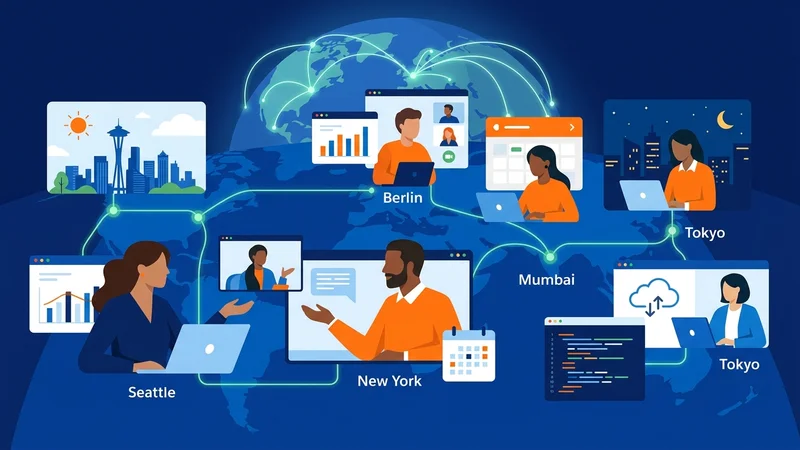
Benefits of Distributed Teams
-
Access to Global Talent: One of the most significant advantages of distributed teams is the ability to hire talent from anywhere in the world. This allows companies to assemble a team with diverse skills and expertise, which can be crucial for innovation and competitiveness.
-
Cost Savings: By eliminating the need for large office spaces, companies can significantly reduce overhead costs. This includes savings on infrastructure, utilities, and maintenance, which can be redirected towards other strategic initiatives.
-
Enhanced Flexibility and Productivity: Distributed teams often report higher productivity levels due to reduced commuting time and fewer office distractions. Employees can work in environments that best suit their productivity styles, leading to improved job satisfaction and reduced turnover rates.
-
24/7 Operations: With team members spread across different time zones, businesses can operate on a 24/7 schedule. This enables companies to respond quickly to global market demands and provide continuous customer support.
Challenges of Managing Distributed Teams
Managing distributed teams comes with its own set of challenges. Some of the key issues include:

-
Communication and Collaboration: Ensuring seamless communication and collaboration among team members who are geographically dispersed can be difficult. It requires the use of sophisticated digital tools and strategies to maintain cohesion and alignment.
-
Cultural Differences: Teams with members from diverse cultural backgrounds may face challenges related to communication styles, work ethics, and social norms. Addressing these differences is crucial to avoid misunderstandings and conflicts.
-
Remote Isolation: Remote workers can feel disconnected from the rest of the team and the organization. Implementing strategies to foster a sense of community and inclusion is essential to mitigate this issue.
Strategies for Effective Distributed Team Management
To overcome the challenges associated with distributed teams, companies can adopt several strategies:

Use of Collaboration Tools
Utilizing cloud-based collaboration tools is essential for maintaining communication and workflow efficiency. Platforms like Zoom, Slack, and Trello enable team members to share information, collaborate on projects, and stay connected in real-time.
Structured Meetings and Asynchronous Workflows
Implementing structured virtual meetings and adopting asynchronous workflows can help manage time zone differences and ensure that all team members are aligned with project goals. Recording meetings and sharing notes can also help those who miss live sessions.
Cultural Sensitivity and Team Building
Educating team members about cultural differences and organizing virtual team-building activities can foster a sense of unity and understanding among team members. This helps in creating a positive work environment that supports collaboration and innovation.
Embracing Digital Transformation
The success of distributed teams heavily relies on embracing digital transformation. This involves leveraging technology not only for communication but also for project management, data analytics, and security. Cloud computing plays a crucial role in reducing IT costs and enhancing operational flexibility.
Cloud Computing Benefits
- Scalability: Cloud services allow businesses to scale their operations quickly without the need for extensive hardware investments.
- Cost Efficiency: Cloud solutions reduce the need for on-premises infrastructure, leading to significant cost savings.
- Accessibility: Team members can access resources and collaborate from anywhere, at any time, as long as they have an internet connection.
Implementing Systems and Software Solutions
To support distributed teams, companies must implement robust systems and software solutions that facilitate seamless collaboration and workflow management. This includes tools for project tracking, time management, and secure data storage. Effective implementation of these systems requires careful planning and integration with existing business processes.
IT Consulting for Distributed Teams
Engaging IT consulting services can be invaluable in setting up and optimizing the technological infrastructure needed for distributed teams. IT consultants can help businesses choose the right tools, ensure data security, and streamline communication processes to maximize team productivity.
Future of Distributed Teams
As technology continues to advance and global connectivity improves, distributed teams are likely to become even more prevalent. Companies that adapt to this model will be better positioned to compete in the global market, attract top talent, and achieve operational efficiency. By embracing the challenges and opportunities presented by distributed teams, businesses can unlock new levels of innovation and growth.