
Strategic Technology Planning: A Roadmap for Digital Transformation
Strategic technology planning explained — align tech initiatives with business goals to enhance operations and drive innovation.
Get Free Consultation
Introduction to Strategic Technology Planning
In today's rapidly evolving business landscape, strategic technology planning is crucial for organizations seeking to leverage technology as a catalyst for growth and innovation. This process involves creating a comprehensive roadmap that aligns technology initiatives with business objectives, ensuring that investments in technology contribute directly to achieving organizational goals. By embracing strategic technology planning, businesses can optimize operations, enhance customer experiences, and gain a competitive edge in the market.

Why Strategic Technology Planning Matters
Strategic technology planning is essential for several reasons:
- Alignment with Business Goals: It ensures that technology investments are aligned with the organization's strategic objectives, maximizing the return on investment and minimizing wasteful spending.
- Operational Efficiency: By streamlining processes and automating repetitive tasks, organizations can improve overall efficiency and reduce costs.
- Innovation and Competitive Advantage: It fosters a culture of innovation, allowing businesses to stay ahead of the competition by leveraging emerging technologies.
Foundations of Strategic Technology Planning
A successful strategic technology plan should include several key elements:

- Vision and Direction: Leaders must provide a clear vision and direction for the technology plan, aligning it with the overall business strategy.
- Resource Allocation: Effective allocation of resources, including budgets and personnel, is critical to support technology initiatives.
- Change Management: Implementing new technologies often requires managing change within the organization, which involves creating a culture of innovation and providing necessary training and support.
Steps to Creating an Effective Technology Plan
Creating an effective strategic technology plan involves several steps:
- Define Business Objectives: Clearly articulate business objectives and goals to guide the technology plan.
- Assess Current Technology: Evaluate existing technological infrastructure to identify strengths, weaknesses, and areas for improvement.
- Identify Gaps and Opportunities: Analyze gaps between current technology and desired outcomes to prioritize initiatives.
- Develop a Roadmap: Create a roadmap outlining technology initiatives, timelines, budgets, and resource requirements.
Key Components of a Strategic Technology Plan
A comprehensive strategic technology plan should include:
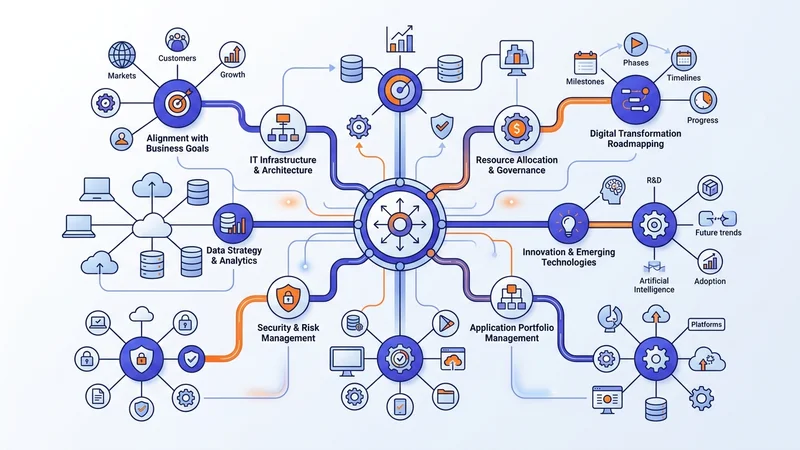
- Vision: A clear vision about how data and technology will enable strategic outcomes.
- Roadmap: A detailed roadmap defining the blueprint for forward-looking capabilities.
- Short-term Action Plan: A plan that moves implementation forward while delivering near-term value.
- Streamlining and Automation: Strategies to streamline and automate organizational processes.
Benefits of Strategic Technology Planning
Strategic technology planning offers several benefits:
- Clear Roadmap for Investments: It provides a clear roadmap for technology investments, ensuring resources are allocated effectively.
- Adaptability to Market Changes: By monitoring emerging technologies and trends, businesses can anticipate and adapt to changes in the market.
- Innovation: It fosters innovation within the organization, encouraging employees to explore new possibilities.
Implementing Strategic Technology Planning
Implementing a strategic technology plan involves several key steps:
- Establish a Steering Committee: Form a committee to oversee the planning process and ensure alignment with business objectives.
- Review Current Setup: Assess the current technological infrastructure to identify areas for improvement.
- Interview Key Individuals: Gather insights from key staff and management to understand technology needs and deficiencies.
- Analyze and Assess Data: Analyze data to identify technology needs and create potential projects to address them.
- Prioritize Plans: Prioritize projects based on strategic importance and resource availability.
Challenges and Opportunities
While strategic technology planning presents numerous opportunities, it also involves challenges such as managing change and ensuring effective communication across the organization. Overcoming these challenges requires strong leadership and a well-structured plan.
Technology Roadmap and Architecture
Developing a technology roadmap is crucial for outlining the future technological landscape of an organization. This roadmap should include:
- Platform Architecture: A blueprint for forward-looking capabilities.
- Scalability and Viability: Ensure that the technology plan adopts principles of scalability and long-term viability.
- Compliance and Governance: Considerations for compliance, governance, and security are essential.
Budgeting and Resource Allocation
Effective budgeting and resource allocation are critical components of a strategic technology plan. This involves:
- Cost Analysis: Quantifying costs associated with technology investments, including engineering costs and staffing needs.
- Prioritization: Prioritizing initiatives based on strategic alignment and resource availability.
Change Management and Leadership
Change management is a vital aspect of implementing new technologies. Leaders must:
- Communicate Effectively: Ensure that the plan is communicated clearly to all stakeholders.
- Manage Resistance: Address resistance to change by providing necessary training and support.
- Foster Innovation: Encourage a culture of innovation and technological advancement.
Monitoring and Evaluation
Regular monitoring and evaluation of the technology plan are essential to ensure it remains aligned with business objectives. This involves:
- Data-Driven Decisions: Making decisions based on data to identify areas for improvement.
- Adjusting the Plan: Being prepared to adjust the plan as business needs evolve.
Future-Proofing with Strategic Technology Planning
In a rapidly evolving technological landscape, strategic technology planning is key to future-proofing businesses. By aligning technology initiatives with business goals and staying adaptable to market changes, organizations can secure long-term success and remain competitive.
Tools and Resources for Strategic Technology Planning
Several tools and resources are available to support the development of a strategic technology plan:
- Technology Assessment Tools: These tools help evaluate current technological infrastructure and identify areas for improvement.
- Project Management Software: Useful for creating and managing technology roadmaps.
- Industry Research and Reports: Essential for staying informed about emerging technologies and trends.
- Technology Consultants: Can provide expert advice and insights based on industry experience.
By leveraging these tools and resources, businesses can navigate the complex landscape of technology and ensure their strategic technology plan is both effective and sustainable.
Strategic Technology Planning in Practice
In practice, strategic technology planning involves a continuous cycle of assessment, planning, implementation, and evaluation. It requires strong leadership, effective communication, and a commitment to innovation and technological advancement.
Case Studies and Examples
Real-world examples of successful strategic technology planning can provide valuable insights into how businesses have leveraged technology to achieve their goals. These case studies often highlight the importance of aligning technology initiatives with business objectives and the benefits of a well-structured technology roadmap.
The Role of Leadership in Strategic Technology Planning
Leaders play a crucial role in strategic technology planning by providing vision, direction, and resources. They must ensure that the technology plan is aligned with the overall business strategy and that it is communicated effectively across the organization.
Communication and Collaboration
Effective communication and collaboration are essential for the success of a strategic technology plan. Leaders must foster a culture of innovation and ensure that all stakeholders are engaged and informed throughout the planning and implementation process.
Strategic Technology Planning and Digital Transformation
Strategic technology planning is a cornerstone of digital transformation, enabling organizations to harness the power of technology to transform their operations and achieve strategic objectives. By aligning technology initiatives with business goals, organizations can drive innovation, enhance customer experiences, and gain a competitive edge in the market.
The Future of Strategic Technology Planning
As technology continues to evolve, the importance of strategic technology planning will only grow. Businesses must remain adaptable, leveraging emerging technologies to stay ahead of the competition and secure long-term success.
Related: Digital Transformation Services Fractional CTO Services