
Unlocking Business Potential with Data Analytics
How data analytics turns raw data into actionable insights — applications and benefits for smarter business decisions across industries.
Get Free Consultation
Introduction to Data Analytics
Data analytics is the process of analyzing raw data to extract meaningful insights that can inform business decisions, optimize performance, and drive innovation. It involves a range of techniques and tools to collect, organize, and interpret large datasets, uncovering trends, patterns, and correlations that might otherwise remain hidden. In today's data-driven world, organizations rely heavily on data analytics to stay competitive and make informed strategic decisions.
Types of Data Analytics
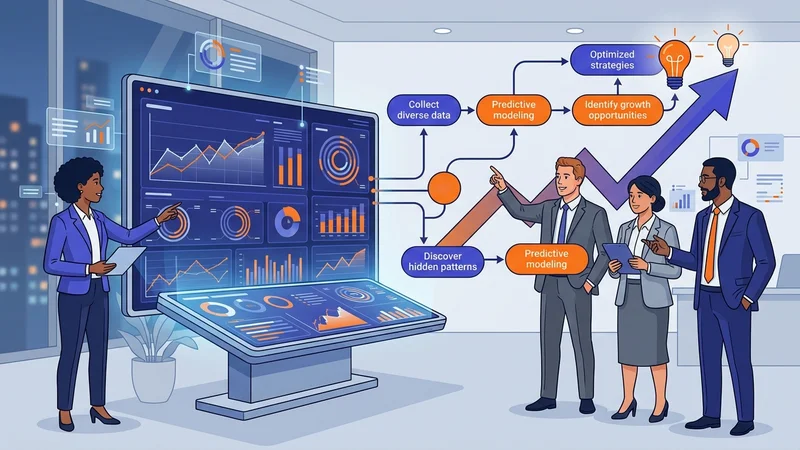
Data analytics can be categorized into four main types: descriptive analytics, diagnostic analytics, predictive analytics, and prescriptive analytics. Each type serves a distinct purpose in the data analysis process:
-
Descriptive Analytics: This type focuses on summarizing past data to understand what has happened. It helps in identifying trends and patterns by analyzing historical data.
-
Diagnostic Analytics: This stage delves deeper into the data to determine why certain events occurred. It involves analyzing root causes and underlying factors.
-
Predictive Analytics: By using statistical models and machine learning algorithms, predictive analytics forecasts future trends and behaviors based on historical data.
-
Prescriptive Analytics: This final stage goes beyond prediction by providing actionable recommendations for future decisions, optimizing outcomes based on insights from previous analyses.
Applications of Data Analytics
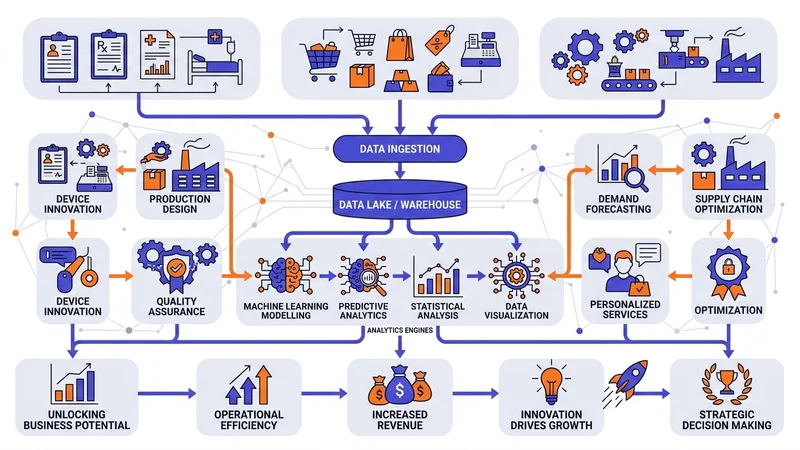
Data analytics has a wide range of applications across various industries, from enhancing customer experiences to optimizing operational efficiencies.
Enhancing Customer Experience
Data analytics plays a crucial role in understanding customer needs and preferences. By analyzing customer data, businesses can tailor their marketing strategies to better engage with their audience. This includes personalizing customer experiences, improving product offerings, and enhancing overall customer satisfaction.
Operational Efficiency
Data analytics helps organizations streamline their operations by identifying bottlenecks and inefficiencies. It enables companies to optimize resource allocation, reduce costs, and improve productivity. For instance, manufacturing companies use data analytics to optimize machine runtime and reduce downtime, ensuring peak operational efficiency.
Risk Management
Predictive analytics, a subset of data analytics, is instrumental in identifying potential risks and threats. By analyzing historical data and patterns, businesses can anticipate and mitigate risks before they materialize, ensuring strategic preparedness and minimizing disruptions.
Technologies and Tools in Data Analytics
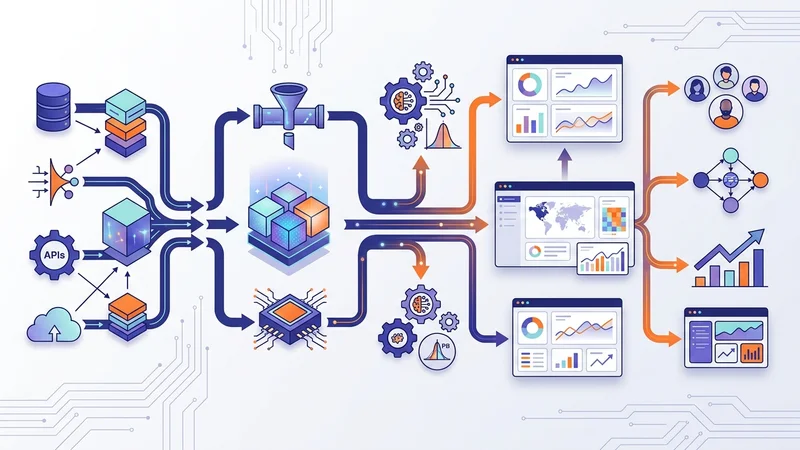
The field of data analytics relies on a variety of technologies and tools to process and analyze large datasets efficiently. These include:
-
Machine Learning and AI: These technologies are used to develop predictive models that can forecast future trends and behaviors based on historical data.
-
Data Visualization Tools: Tools like Tableau and Power BI are essential for presenting complex data insights in a clear and understandable format, facilitating decision-making across organizations.
-
Big Data Frameworks: Technologies such as Hadoop are used for distributed processing of large datasets, enabling organizations to handle the volume, velocity, and variety of big data.
Benefits of Data Analytics
The integration of data analytics into business operations offers numerous benefits, including:
-
Informed Decision-Making: Data analytics provides actionable insights that help organizations make strategic decisions based on data-driven evidence rather than intuition.
-
Competitive Advantage: By leveraging data analytics, businesses can gain a competitive edge by identifying market gaps, optimizing operations, and enhancing customer experiences.
-
Innovation and Growth: Data analytics drives innovation by uncovering new opportunities and enabling businesses to develop new products and services tailored to customer needs.
Challenges in Data Analytics
Despite its benefits, data analytics also presents several challenges, particularly in handling the volume, velocity, and variety of data. Ensuring data quality and veracity is crucial, as decisions based on inaccurate data can lead to negative outcomes.
Volume and Velocity
The sheer volume and speed at which data is generated pose significant challenges. Traditional storage and processing solutions often struggle to manage these large datasets efficiently, necessitating the use of big data technologies and cloud-based solutions.
Variety and Veracity
Data comes in diverse formats, from structured to unstructured data. Managing this variety requires flexible data management systems, while ensuring data veracity involves rigorous data cleaning and validation processes.
Future of Data Analytics
As technology continues to evolve, the role of data analytics in business will become even more pivotal. With advancements in AI and machine learning, organizations will be able to extract deeper insights from their data, driving further innovation and strategic decision-making.
In the future, data analytics will play a critical role in driving digital transformation across industries. As businesses seek to leverage data to enhance operations and customer experiences, the demand for skilled professionals in data analytics will continue to rise.
Data analytics is the process of analyzing raw data to extract meaningful insights that inform business decisions, optimize performance, and drive innovation.
The main types of data analytics are descriptive, diagnostic, predictive, and prescriptive analytics.
Descriptive analytics is used to summarize past data, helping to understand what has happened by identifying trends and patterns.
Data analytics enhances customer experience by allowing businesses to tailor their marketing strategies, personalize customer interactions, and improve product offerings based on customer data.
Data analytics relies on technologies such as machine learning, AI, data visualization tools, and big data frameworks like Hadoop.
The benefits include informed decision-making, gaining a competitive advantage, driving innovation, and enhancing customer experiences.
Data analytics faces challenges related to handling the volume, velocity, and variety of data, ensuring data quality and veracity.
In the future, data analytics will play a critical role in driving digital transformation across industries, enhancing operations and customer experiences.
Predictive analytics helps in risk management by identifying potential risks and threats based on historical data and patterns, allowing businesses to anticipate and mitigate risks.
Data analytics is important for businesses as it enables them to make informed strategic decisions, optimize operations, and gain a competitive edge.